
E-Documents

The German customer sends XML you cannot read, Vienna rejects the invoice, the Swiss payment arrives without a reference

Germany requires structured e-invoices between domestic businesses, Austria for invoices to the federal government, and Switzerland uses the QR-bill and eBill. Panda ERP has ready implementations for all three and produces each format from the same invoice record.

E-Invoicing in Germany, Austria & Switzerland
In short

E-invoicing in Germany, Austria and Switzerland follows three different rule sets. Germany requires structured invoices under EN 16931 between domestic businesses: receiving since 1 January 2025, issuing from 2027 or 2028. Austria has required e-invoices to federal government bodies since 1 January 2014. Switzerland has no B2B mandate; its standards are the QR-bill and eBill.

How is this work done today?

  • Incoming German e-invoices are printed and retyped

    The supplier's XRechnung or ZUGFeRD file arrives by e-mail. It is opened in a viewer, printed and entered into the accounts line by line.

    1 person × 10 minutes / invoice
  • Invoices to public buyers are keyed into portals

    The invoice already exists in the ERP, but it is typed again into the web form of the public invoice portal, with the routing ID, order reference and bank details.

    1 person × 15 minutes / invoice
  • Swiss payments are allocated by hand

    Payments from Swiss customers arrive without a usable reference. The accountant compares amounts and names on the bank statement with open invoices.

    1 accountant × 2 hours / week

How does E-Invoicing in Germany, Austria & Switzerland work?

  1. 1

    Receiver rules are stored on the customer card

    Country, preferred format, the German routing ID (Leitweg-ID), the Austrian order reference, a Peppol ID or the Swiss eBill registration are kept per customer. Panda ERP chooses format and channel from them.

  2. 2

    The invoice is generated in the right format

    XRechnung in UBL or CII, ZUGFeRD as PDF with embedded XML, ebInterface or Peppol UBL for the Austrian federal government, or a Swiss invoice with QR payment part, all from the same record.

  3. 3

    Validation, approval and sending

    The file is checked against the rules of its format before it leaves. After approval it goes out by e-mail, Peppol, the web service of e-Rechnung.gv.at or an eBill network partner.

  4. 4

    Status, payment and archive

    Acceptance or rejection is stored on the invoice. Incoming payments are matched by reference, and the original structured file is archived unchanged for export by period.

See how E-Invoicing in Germany, Austria & Switzerland would work in your business

Tell us briefly about your process and we will walk through the screens with your own example.

  • Reply the same business day
  • 15+ years of experience
  • 90 client businesses

E-Invoicing in Germany, Austria & Switzerland features

E-Invoicing in Germany, Austria & Switzerland: Germany: receiving since 2025, issuing from 2027/2028
  • Germany: receiving since 2025, issuing from 2027/2028

    Every domestic business has had to be able to receive e-invoices since 1 January 2025. Issuing becomes mandatory on 1 January 2027 for businesses with prior-year turnover above EUR 800,000 and on 1 January 2028 for all (§ 14 and § 27 (38) UStG).

  • Germany: XRechnung and ZUGFeRD

    Both formats meet the legal requirements: XRechnung as pure XML, ZUGFeRD from version 2.0.1 as a PDF with embedded XML, except the MINIMUM and BASIC-WL profiles. A plain PDF does not count as an e-invoice.

  • Germany: no central reporting platform

    The law defines the format, not the channel. Businesses exchange invoices directly, for example by e-mail or Peppol; as of November 2026 there is no state reporting system for B2B transactions.
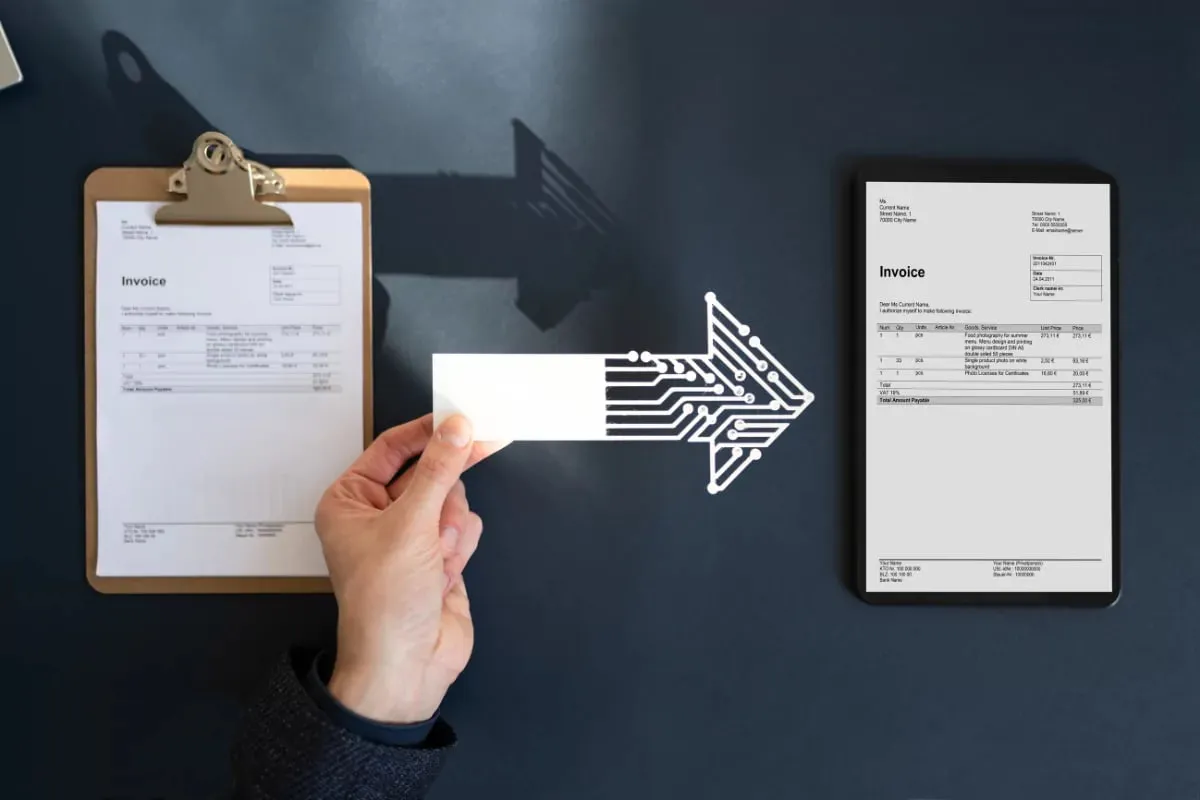

E-Invoicing in Germany, Austria & Switzerland: Germany: invoices to public bodies
  • Germany: invoices to public bodies

    Suppliers to the federal administration have been obliged to send e-invoices since 27 November 2020. The receiver is addressed by its Leitweg-ID, which Panda ERP takes from the customer card.

  • Austria: e-invoices to the federal government

    Contract partners of federal bodies submit structured invoices through e-Rechnung.gv.at in ebInterface or Peppol UBL, with supplier number and order reference. There is no general B2B mandate in Austria as of November 2026.

  • Switzerland: QR-bill

    The payment part with the Swiss QR Code replaced the former payment slips on 1 October 2022. Panda ERP prints it with QR reference or Creditor Reference and with structured addresses, as the standard has required since November 2025.

  • Switzerland: eBill

    eBill is the digital invoicing platform of SIX: the invoice arrives in the customer's e-banking and is approved there. Connection runs through a certified network partner; Panda ERP hands the invoices to its interface.

  • EUR and CHF, three sets of tax rates

    German, Austrian and Swiss VAT rates and exemption reasons are maintained per country and carried into the structured invoice. Balances are reported in the invoice currency and the company currency.

What does Panda AI add to E-Invoicing in Germany, Austria & Switzerland?

The Finance and Accounting Agent is the Panda AI agent that takes on due-date tracking, bank-to-ERP matching and draft account reconciliations.

  1. Today Bank transactions are matched to the ERP by hand With the agent Unmatched transactions are listed every morning
  2. Today Due-date lists are kept separately in Excel With the agent A cash flow forecast is ready on current data
  3. Today Account reconciliation e-mails are written one by one With the agent Reconciliation e-mails arrive as drafts; approval is yours

Jobs it takes on

  • Due-date and collections tracking
  • Bank-to-ERP matching check
  • Cash flow and budget variance report
  • Draft account reconciliations
  • Invoice and expense inconsistency alerts
  • Month-end closing checklist

The agent prepares, a person approves. Anything that posts a record or sends something outside the company goes through your approval.

Explore Panda AI agents

Frequently asked questions about E-Invoicing in Germany, Austria & Switzerland

Who must issue e-invoices in Germany, and from when?

For supplies between businesses established in Germany, issuing becomes mandatory on 1 January 2027 for businesses with more than EUR 800,000 turnover in the previous year and on 1 January 2028 for all others. The duty to be able to receive e-invoices has applied to every business since 1 January 2025. Status: November 2026.

Is there a government portal for B2B invoices in Germany?

No. Section 14 of the German VAT Act regulates the format of the e-invoice, not how it is transmitted. Businesses exchange invoices directly. Central platforms exist only for invoices to the public administration.

Are e-invoices mandatory between businesses in Austria or Switzerland?

As of November 2026, no. Austria requires structured e-invoices only towards federal government bodies, since 1 January 2014. In Switzerland the QR-bill is the standard for the payment part and eBill is a voluntary digital channel; neither is a tax reporting system.

Is the Swiss QR-bill an e-invoice?

Not in the sense of a structured invoice such as XRechnung. The QR code contains the payment details, not the invoice lines. It standardises how the invoice is paid and lets the incoming payment be matched to the invoice by its reference.

We are based outside the DACH region. Do these rules affect us?

The German obligation applies to supplies between businesses established in Germany, so a German subsidiary or branch is affected. Suppliers to public bodies in Germany or Austria follow the rules of those buyers. Ask your tax adviser how your structure is treated; we then configure Panda ERP accordingly.

How does Panda ERP support the three countries?

Panda ERP has ready implementations for Germany, Austria and Switzerland: it creates the invoice in the required format, sends it and stores status and original file on the record. Registration on public portals remains your company's task, and we guide you through it. Get in touch through the contact form.

See E-Invoicing in Germany, Austria & Switzerland with your own data

Describe your process in a few sentences and we will show you the modules that fit.

  • 15+ years of enterprise software experience
  • In the cloud or on your own server
  • Processes compliant with KVKK (Turkey's data protection law)

Last reviewed: · Panda Yazılım product team

Sources: Germany: § 14 UStG, issuing invoices (Gesetze im Internet) , Germany: § 27 (38) UStG, transitional rules for e-invoices , Germany: XRechnung standard (KoSIT, xeinkauf.de) , Germany: e-invoicing in the federal administration (e-rechnung-bund.de) , FeRD: ZUGFeRD standard , Austria: e-invoicing to the federal government (erechnung.gv.at) , Austria, e-Rechnung.gv.at: legal information , SIX: QR-bill , eBill for business customers (ebill.ch) , Swiss Federal Finance Administration: e-invoicing